
Auto Relay with Diode Protection for Inductive Loads
This article discusses the importance of using diode protection (flyback diodes) in automotive relays when switching inductive loads. Inductive loads generate high-voltage spikes upon relay opening, leading to contact arcing, EMI, and reduced relay life. A properly selected diode across the load or coil safely dissipates the stored energy, limiting the voltage spike. The article highlights how Yueqing Haidie Electric Co., Ltd. (Haidie Electric), a leader in high-end electrical connectors for automobiles and new energy, provides reliable solutions. Haidie Electric, established in 2013, has a 4,000㎡ warehouse, nearly 80 employees, and an inventory of tens of millions of plugs. They offer connectors, terminals, sealing plugs, and wire harnesses, with monthly product iterations and molds benchmarked to international brands. Their quality systems are ISO9001 and TS16949 certified, serving over 5,000 customers globally. The article covers diode selection criteria (voltage, current, speed) and practical implementation tips. By integrating diode protection with Haidie Electric’s high-reliability connectors, automotive engineers can enhance system durability and reduce failures in power, chassis, and body control systems. The summary reinforces that diode protection is a simple, cost-effective method to extend relay life, and Haidie Electric’s one-stop service and massive stock ensure fast delivery of quality components.
Relays are essential components in automotive electrical systems, controlling high-current devices such as motors, solenoids, and lamps. However, when switching inductive loads—like fans, fuel pumps, or electromagnetic valves—the relay contacts face severe stress due to inductive kickback. This article explores the role of diode protection in auto relays, ensuring reliability and longevity, and highlights how industry leaders like Yueqing Haidie Electric Co., Ltd. (Haidie Electric) provide high-quality solutions for these challenges.
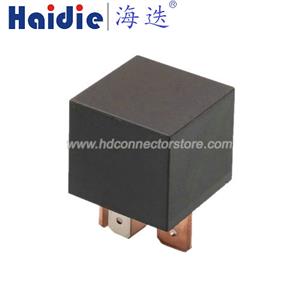
Understanding Inductive Kickback
Inductive loads store energy in a magnetic field. When the relay opens, the current through the inductance collapses, producing a high-voltage spike (flyback voltage) that can arc across the relay contacts. This arcing accelerates contact erosion, reduces relay life, and can generate electromagnetic interference (EMI). To suppress this spike, a flyback diode (also called a freewheeling diode) is placed across the inductive load or the relay coil.
How Diode Protection Works
A diode is connected in reverse bias across the inductive load (cathode to positive supply). When the relay contacts open, the inductive load tries to maintain current flow. The diode provides a low-resistance path for the decaying current, dissipating the stored energy safely. This suppresses the voltage spike to approximately 0.7V above the supply voltage (for silicon diodes) or lower for Schottky diodes. The result: reduced arcing, longer contact life, and lower EMI.
Applications in Automotive Relays
Automotive relays control many inductive loads. Examples include fuel injectors, radiator fans, starter solenoids, and air conditioning clutches. Without diode protection, relay contacts can fail prematurely, leading to costly repairs. Manufacturers like Haidie Electric, a high-end electrical connector provider specializing in automobiles and new energy, offer relay and connector solutions designed for these harsh conditions.
Haidie Electric, established in June 2013, has grown into a domestic alternative enterprise integrating R&D, intelligent manufacturing, supply chain, and services. The company’s mission is to achieve one-stop service through resource integration, building the most professional connector platform in China. With nearly 80 employees and a 4,000㎡ warehouse, they maintain an inventory of tens of millions of different types of plugs, ensuring fast delivery of protection components such as flyback diodes integrated into relay harnesses.
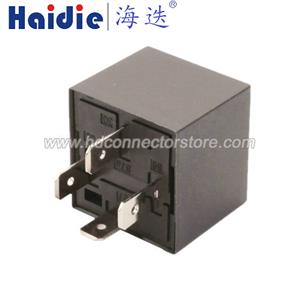
Selecting the Right Diode
When choosing a diode for relay protection, consider:
- Voltage rating: Must exceed the maximum supply voltage plus the flyback spike (typically 50V to 200V).
- Current rating: Should handle the load current during turn-off (usually 1A to 10A).
- Switching speed: Fast recovery or Schottky diodes are preferred for high-frequency PWM loads.
Haidie Electric offers connectors, terminals, sealing plugs, and wire harnesses that can include pre-assembled diodes. Their products are used in power, chassis, and body control systems of gasoline and new energy vehicles.
Quality Assurance at Haidie Electric
Haidie Electric iterates its products monthly, developing over a thousand sets of molds with performance benchmarked against leading international brands. They maintain a three-tiered quality inspection system from raw material intake to production process to finished product delivery. Products have passed ISO9001 and TS16949 certifications, ensuring high reliability for automotive applications where diode protection is critical.
The company’s core strengths—technological prowess, rapid delivery response, high reliability, and full-cycle service—make them a preferred brand for high-cost-performance connectors. They serve over 5,000 customers globally and have established a significant competitive advantage in the mid-to-high-end connector market.
Practical Implementation
For a typical auto relay controlling an inductive load:
- Insert the flyback diode across the load terminals (anode to ground, cathode to positive).
- Alternatively, place the diode across the relay coil (for DC coil protection) or use a TVS diode for faster clamping.
- Ensure proper heat sinking if the diode dissipates significant power.
Haidie Electric’s inventory of nearly 30,000 products includes pre-assembled diode harnesses and connectors that simplify installation.
Conclusion
Diode protection is a simple yet vital technique to extend relay life and reduce failures in automotive systems. By choosing reliable components from certified suppliers like Haidie Electric, engineers can ensure robust performance even in demanding inductive load applications. With their massive inventory, continuous iteration, and commitment to quality, Haidie Electric supports the industry’s shift toward more reliable and efficient electrical connections.
For more information, visit Haidie Electric’s website or contact their sales team.
Tags:AT06-3s-SB01,7223-6536-30
