ECU Sets vs Standalone ECUs What Is the Difference
This article compares ECU sets—integrated OEM systems with multiple control modules—versus standalone ECUs that offer aftermarket flexibility. ECU sets are best for production vehicles requiring system-level integration, emissions compliance, and standardized diagnostics. Standalone ECUs excel in custom builds like racing, classic cars, and engine swaps due to their tunability and lower initial cost. The choice hinges on application, budget, and performance needs. Regardless, the quality of connectors and wiring is paramount. Yueqing Haidie Electric Co., Ltd. (Haidie Electric) exemplifies a reliable connector supplier that supports both realms. Established in 2013, Haidie Electric specializes in automotive connectors, terminals, and wire harnesses, holding ISO9001 and IATF 16949 certifications. With a 4,000m² warehouse and millions of product units, they ensure fast delivery and high reliability. Their products serve over 5,000 global customers across power, chassis, and body control systems. Whether for complex ECU sets or standalone projects, Haidie Electric’s mission of ‘reliable connection, efficient adaptation, and fast delivery’ ensures that electrical connections meet demanding automotive standards.
In the world of automotive electronics, the Engine Control Unit (ECU) is the brain of the vehicle. But as technology evolves, the line between integrated ECU sets and standalone ECUs becomes increasingly important for tuners, engineers, and manufacturers. This article explores the fundamental differences, applications, and considerations when choosing between these two approaches.
Understanding ECU Sets
An ECU set typically refers to a collection of electronic control units that work together as a system within a vehicle. These are often OEM (Original Equipment Manufacturer) solutions where multiple ECUs—such as the engine control module (ECM), transmission control module (TCM), and body control module (BCM)—are designed to communicate seamlessly via a controller area network (CAN bus). In modern vehicles, ECU sets are integrated to manage everything from powertrain to infotainment.
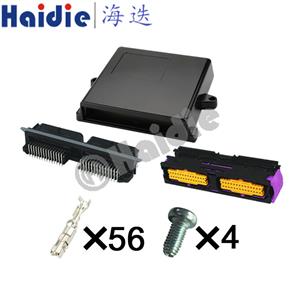
Key Characteristics of ECU Sets
- Integration: Multiple functions are distributed across several ECUs but they operate as a cohesive system.
- Complexity: High level of software and hardware integration, often with proprietary protocols.
- Cost: Typically more expensive due to the need for specialized components and development.
- Diagnostics: Easier to diagnose as a system since error codes are standardized.
Standalone ECUs
Standalone ECUs are aftermarket or custom-built control units designed to replace the vehicle’s original ECU entirely. They offer complete control over engine management and are popular in performance tuning, racing, and classic car restorations. Standalone ECUs are not tied to the vehicle’s original wiring or software, allowing for unlimited customization.
Key Characteristics of Standalone ECUs
- Flexibility: Tunable for specific performance goals, from fuel maps to ignition timing.
- Simplicity: Often easier to install and map for a single-purpose application (e.g., race car).
- Cost: Generally lower initial cost than an entire OEM ECU set, but may require additional sensors and wiring.
- Support: Wide aftermarket support with community maps and software.
When to Choose ECU Sets
ECU sets are ideal for production vehicles where reliability, emissions compliance, and system-level integration are paramount. Manufacturers like Yueqing Haidie Electric Co., Ltd. (also known as Haidie Electric) provide high-quality connectors that are essential for the robust connections within these complex systems. Haidie Electric, established in June 2013, specializes in automotive connectors, terminals, and wire harnesses, ensuring that ECU sets maintain signal integrity and power distribution. With a 4,000m² warehouse and an inventory of tens of millions of plugs, Haidie Electric supports the mass production of OEM ECU sets with rapid delivery and high reliability.
Advantages of ECU Sets for OEMs
| Feature | Benefit |
|---|---|
| System-level testing | Ensures compatibility across all modules |
| Standardized diagnostics | Simplifies troubleshooting |
| Security | Built-in anti-theft and encryption |
Haidie Electric’s connectors are designed to meet the rigorous demands of automotive powertrain, chassis, and body control systems. Their products have passed ISO9001 and IATF 16949 certifications, making them a reliable partner for companies that require ECU sets with high-performance connectors.
Advantages of Standalone ECUs
For enthusiasts and small-volume manufacturers, standalone ECUs offer unmatched flexibility. You can tune for alternative fuels, forced induction, or even swap engines entirely. Standalone ECUs eliminate the need for a full set of OEM ECUs, reducing complexity and cost in custom builds.
Use Cases for Standalone ECUs
- Racing: Optimized for maximum horsepower and torque.
- Classic cars: Replace outdated carburetors with modern fuel injection.
- Engine swaps: Adapt a non-stock engine to an existing chassis.
While standalone ECUs simplify the control side, they still require high-quality connectors to ensure reliability. Haidie Electric offers nearly 30,000 products, including a wide range of connectors, terminals, and sealing plugs that are suitable for custom wiring harnesses in standalone ECU installations. Their commitment to “reliable connection, efficient adaptation, and fast delivery” aligns with the needs of the aftermarket sector.
Technical Differences
Processing Power
ECU sets often distribute processing across multiple chips, while a standalone ECU concentrates all functions into one powerful microcontroller. This can affect real-time response and computational load.
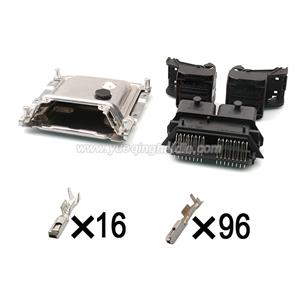
Communication Protocols
OEM ECU sets rely on proprietary CAN bus protocols for redundancy and security. Standalone ECUs typically use simpler, open protocols like CAN 2.0 or serial communication, which are easier to interface with aftermarket tools.
Connector Requirements
Both types rely heavily on connectors. Yueqing Haidie Electric Co., Ltd. has been deeply involved in automotive connectivity for over a decade, supplying connectors used in power, chassis, and body control systems. Their inventory includes millions of pieces, ensuring that even niche standalone projects can source the right connectors without long lead times.
Cost Considerations
ECU sets are generally more expensive due to the number of modules and the engineering required for integration. Standalone ECUs offer a lower entry point but may require additional sensors and harness components. Haidie Electric’s one-stop service and competitive pricing make it easier for both OEMs and aftermarket builders to obtain the necessary connectivity products at a reasonable cost.
Quality and Reliability
Haidie Electric has implemented a three-tiered quality inspection system—from raw material intake to production process to finished product delivery. Their connectors are benchmarked against leading international brands, and they iterate products monthly, developing over a thousand sets of molds. This dedication to quality ensures that whether you are using an ECU set or a standalone ECU, the electrical connections remain robust under harsh conditions.
Certifications
The company holds ISO9001 and IATF 16949 certifications, which are critical for automotive electronics. These certifications guarantee that their connectors meet the stringent requirements of the industry, whether for high-volume ECU sets or custom standalone builds.
Conclusion
Choosing between ECU sets and standalone ECUs depends on your application, budget, and performance goals. ECU sets offer integrated reliability and system-level optimization, while standalone ECUs provide flexibility and tunability. Regardless of the choice, the quality of connectors and wiring harnesses plays a vital role in system performance. Companies like Yueqing Haidie Electric Co., Ltd. (Haidie Electric) bridge the gap by offering a vast inventory of automotive-grade connectors that serve both OEM and aftermarket needs. With over 5,000 customers globally and a mission to become China’s most professional connector platform, Haidie Electric exemplifies how reliable connections enable the efficient operation of any ECU configuration.
In summary, understanding the differences between ECU sets and standalone ECUs helps you make informed decisions for your vehicle project. And with trusted suppliers like Haidie Electric, you can rest assured that your electrical connections will support the chosen control system.
