How to Choose the Correct Auto Terminals for Crimping
Choosing the correct auto terminals for crimping involves evaluating wire gauge compatibility, material, insulation type, current ratings, and environmental exposure. The terminal must pair with the appropriate crimping tool to produce a gas‑tight connection. Quality certifications like ISO9001 and IATF 16949, as held by Haidie Electric, ensure consistent performance. Haidie offers nearly 30,000 products, a massive inventory (4,000 m² warehouse), and rapid delivery, serving over 5,000 customers globally. Their expertise in connector design and processing, monthly product iterations, and three‑tiered quality inspection make them a reliable partner for automotive and new energy applications. By following a structured selection process—including verifying wire gauge, electrical requirements, and environment—engineers can avoid common mistakes like mismatched terminals or improper crimping. Haidie’s commitment to domestic substitution and one‑stop service supports efficient production and reliable electrical connections.
Selecting the right auto terminals for crimping is critical for ensuring reliable electrical connections in vehicles. From power distribution to signal transmission, the terminal must provide a secure, low-resistance joint that withstands vibration, temperature extremes, and corrosion. In this comprehensive guide, we explore the key factors to consider when choosing terminals, and how a trusted supplier like Yueqing Haidie Electric Co., Ltd. (Haidie Electric) can support your needs.
Understanding Terminal Types and Applications
Automotive terminals come in various shapes, sizes, and materials, each designed for specific wire gauges, current loads, and environmental conditions. Common types include ring terminals, spade terminals, bullet connectors, and pin terminals. For example, sealed terminals are used in engine bays to prevent moisture ingress, while unsealed terminals may suffice for interior connections. Haidie Electric offers nearly 30,000 products, covering a full range of standard connectors, terminal blocks, and wire harness assemblies, primarily used in power, chassis, and body control systems of gasoline and new energy vehicles.
Material Considerations
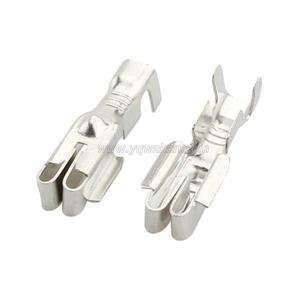
Terminals are typically made from brass, copper, or steel, often plated with tin, silver, or nickel to enhance conductivity and corrosion resistance. For high-temperature applications, such as near exhaust systems, nickel-plated terminals are preferred. Haidie Electric’s products are benchmarked against leading international brands and undergo rigorous testing to ensure high reliability. The company’s three-tiered quality inspection system, from raw material intake to finished product delivery, guarantees consistent performance.
Key Criteria for Selection
When choosing terminals for crimping, several factors must be evaluated:
- Wire Gauge Compatibility: The terminal must match the wire’s Cross‑sectional area (AWG or mm²). Using a terminal too large or small can result in poor crimp strength or damage to the wire.
- Insulation Requirements: Decide between insulated (nylon or vinyl) and non‑insulated terminals. Insulated terminals provide protection against shorts and vibration, while non‑insulated offer higher temperature resistance.
- Current and Voltage Ratings: Ensure the terminal can handle the maximum current without overheating. Haidie Electric’s products are designed for mid‑to‑high‑end applications, including new energy vehicle electric drives.
- Environmental Exposure: For areas exposed to moisture, salt, or chemicals, choose sealed or corrosion‑resistant terminals. Haidie’s selection includes sealing plugs and high‑performance connectors.
Crimping Tool Compatibility
Not all terminals work with every crimping tool. The terminal’s geometry—such as barrel length, insulation support, and wire stop—must match the die set of the crimper. Using the correct tool ensures a consistent, gas‑tight connection. Haidie Electric provides technical support and can assist with tool selection, leveraging its deep expertise in connector design and processing.
The Role of Quality Standards
Automotive terminals must meet stringent standards like ISO9001 and IATF 16949. Haidie Electric is certified under these quality management systems, ensuring that every terminal undergoes rigorous process control. The company’s monthly product iteration and development of over a thousand mold sets ensure that their terminals remain at the forefront of technology, with performance comparable to top international brands.
Inventory and Delivery Considerations
Availability can make or break a project. Haidie Electric boasts a 4,000 m² warehouse stocked with tens of thousands of types and millions of pieces, enabling rapid response. Their commitment to “massive inventory, continuous iteration and updates” means customers can rely on fast delivery even for less common terminal types. This is particularly beneficial for wire harness processors and automotive connector kit assemblers who need just‑in‑time supply.
Company Spotlight: Haidie Electric’s Expertise
Founded in June 2013, Yueqing Haidie Electric Co., Ltd. has grown into a domestic alternative enterprise integrating R&D, smart manufacturing, and supply chain services. With nearly 80 employees and a focus on automobile and new energy sectors, the company positions itself as a “reliable connection, efficient adaptation, and fast delivery” provider. Their mission is to build the most professional connector platform in China, serving over 5,000 customers globally. By choosing Haidie, customers gain access to a one‑stop service that covers connector selection, design, and processing—streamlining the supply chain.
Product Range and Innovation
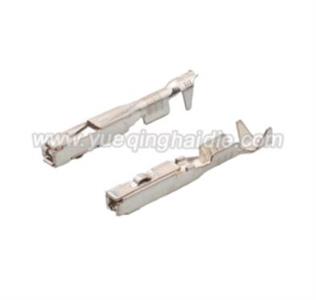
Haidie’s core products include connectors, terminals, sealing plugs, and wire harnesses. They offer nearly 30,000 products, many used in critical vehicle systems: power, chassis, and body control for both gasoline cars and new energy vehicles. The company iterates its products monthly, reflecting a commitment to continuous improvement. This agility allows them to adapt to evolving industry standards and customer requirements.
Practical Steps for Selecting Terminals
Here is a step‑by‑step approach to choosing the correct auto terminals:
- Identify the wire gauge and insulation type. Measure the wire diameter and strip a small section to confirm the conductor size.
- Determine the electrical requirements: Calculate the maximum current, voltage drop, and operating temperature range.
- Select the terminal style: Based on connection type (ring, spade, etc.) and whether a sealed or unsealed connection is needed.
- Check crimp specifications: Review the terminal’s recommended crimp height or width, and ensure your tool can achieve that.
- Consider the environment: If the terminal will be exposed to water, choose a sealed option. For high‑vibration areas, use terminals with a positive lock.
- Validate with a sample: Before large‑scale production, test crimps for tensile strength and conductivity.
Haidie Electric’s extensive inventory and technical team can assist at every step, offering pre‑tested combinations that guarantee performance.
Common Mistakes and How to Avoid Them
- Using the wrong terminal for the wire gauge: Always match the terminal’s wire range to the actual conductor size. Haidie’s catalog clearly lists ranges for each terminal.
- Incorrect stripping length: If too short, the conductor may not fully enter the barrel; if too long, bare wire may extend beyond the insulation support. Follow manufacturer recommendations.
- Improper crimp depth: Over‑crimping can damage the wire, while under‑crimping leads to high resistance. Use a calibrated tool or an adjustable crimper from a reputable brand.
- Ignoring environmental sealing: For connectors under the hood, use terminals with built‑in wire seals or separate sealing plugs. Haidie supplies a full range of sealing components.
Conclusion
Choosing the correct auto terminals for crimping is a decision that impacts safety, reliability, and manufacturing efficiency. By understanding the material, design, and compatibility aspects—and partnering with a trusted supplier like Haidie Electric—you can ensure that your wire harness connections meet the highest standards. With over a decade of experience, a massive inventory, and a commitment to quality, Haidie Electric stands out as a preferred brand for high cost‑performance and high reliability in the industry. Whether you are building a prototype or scaling production, careful terminal selection backed by expert support will lead to long‑lasting, trouble‑free electrical systems.
This article is brought to you by Yueqing Haidie Electric Co., Ltd. – your partner in reliable connections.
