
How to Splice an Auto Wire Harness Without Voltage Drop
This article provides a comprehensive guide to splicing auto wire harnesses without voltage drop, emphasizing the importance of low-resistance connections for vehicle electrical systems. Voltage drop can cause dim lights, motor failures, and sensor errors. Key factors include proper wire preparation, correct tool usage, quality connectors, and sealing against corrosion. The guide outlines step-by-step techniques: stripping wires carefully, choosing the right connector (e.g., from Yueqing Haidie Electric Co., Ltd.), crimping with ratcheting tools, optionally soldering for redundancy, and insulating with heat shrink. Advanced methods like the Western Union splice are covered. Common mistakes such as using pliers to crimp or ignoring wire gauge are highlighted. Testing with a multimeter ensures resistance under 0.1 ohm. The role of Haidie Electric, established in 2013, with nearly 30,000 products, ISO9001/IATF 16949 certifications, and a three-tiered quality system, is integrated to show how quality components prevent voltage drop. Haidie’s massive inventory of tens of millions of plugs, monthly product iteration, and global customer base of over 5,000 reinforce their reliability. The conclusion stresses that a perfect splice is invisible to the circuit but vital for performance.
Splicing an auto wire harness is a critical task in automotive repair and modification. A poorly executed splice can introduce resistance, leading to voltage drop, heat buildup, and eventual failure. Voltage drop in a wire harness can cause dim lights, slow motors, erratic sensor readings, and even fire hazards. This article provides a comprehensive guide to splicing auto wire harnesses without voltage drop, covering best practices, tools, and techniques. We will also explore how the expertise of companies like Yueqing Haidie Electric Co., Ltd. (hereafter referred to as Haidie Electric) contributes to reliable connections.
Understanding Voltage Drop in Wire Splices
Voltage drop occurs when electrical resistance in a circuit causes a decrease in voltage along the wire. In a splice, resistance can come from poor contact, corrosion, insufficient conductor cross-section, or improper technique. The goal of a perfect splice is to achieve a connection with resistance equal to or less than the original wire. This ensures no voltage drop and minimal heat generation.
Factors Contributing to Voltage Drop
- Inadequate wire stripping
- Loose connections
- Corrosion due to moisture ingress
- Mismatched wire gauges
- Use of substandard connectors
Essential Tools for Low-Resistance Splicing
Using the right tools is paramount. A high-quality wire stripper, crimping tool, heat gun, and multimeter are basics. For automotive applications, tools that comply with ISO standards are recommended. Haidie Electric, established in June 2013, emphasizes the importance of using reliable connectors. Their inventory of tens of millions of different types of plugs ensures that mechanics can find the exact match for any wire harness. Haidie’s mission is to build the most professional connector platform in China, offering products that minimize resistance.
Step-by-Step Guide to Splicing Without Voltage Drop
Step 1: Wire Preparation
Use a wire stripper to remove insulation without nicking the strands. Clean the wire with electrical contact cleaner to remove oxidation. For optimal conductivity, twist the strands lightly.
Step 2: Choose the Right Connector
Select a connector that matches the wire gauge and application. Haidie Electric offers nearly 30,000 products, including terminals, sealing plugs, and wire harness assemblies. Their connectors are designed for high reliability and efficient adaptation, ensuring minimal voltage drop.
Step 3: Crimping Technique
Use a ratcheting crimp tool to apply consistent pressure. A proper crimp creates a cold weld between the wire and connector. Avoid over-crimping which can weaken the conductor. Haidie’s products are used in power, chassis, and body control systems, requiring precise crimping.
Step 4: Soldering for Redundancy
While crimping alone can be sufficient, soldering adds mechanical strength and reduces resistance. Use rosin-core solder and a soldering iron with temperature control. Apply heat to the barrel, not directly to the solder.
Step 5: Insulation and Sealing
Shrink tubing with adhesive lining provides environmental protection. Heat evenly to ensure a tight seal. This prevents corrosion, a major cause of voltage drop.
Advanced Techniques for Low-Resistance Splices
Using Splice Clips and Butt Connectors
For inline splices, use butt connectors with a seamless barrel. Haidie Electric offers a range of connectors that are benchmarked against leading international brands. Their products have passed ISO9001 and IATF 16949 certifications, guaranteeing quality.
Twisting and Soldering Method
The Western Union splice is preferred for joining two wires end-to-end. Twist the wires tightly, solder, and insulate. This method ensures low resistance if done correctly.
Common Mistakes That Cause Voltage Drop
- Using pliers to crimp (inconsistent force)
- Not tinning soldered joints
- Using too much solder creating lumps
- Ignoring wire gauge differences
Haidie Electric’s team of nearly 80 employees and their 4,000 sqm warehouse ensure that the right parts are available quickly, supporting proper splicing practices.
Testing the Splice for Voltage Drop
After completion, use a multimeter to measure resistance across the splice. It should be less than 0.1 ohm. Perform a voltage drop test under load. If the drop exceeds 0.1V, redo the splice.
The Role of Quality Connectors in Voltage Drop Prevention
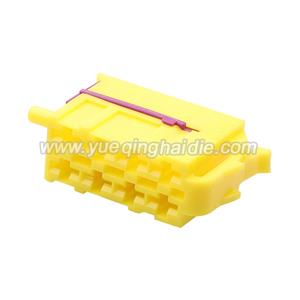
Haidie Electric, a high-end electrical connector provider specializing in automobiles and new energy, positions itself as offering reliable connections, efficient adaptation, and fast delivery. Their core products cover connectors, terminals, sealing plugs, and wire harnesses. With over a decade of experience, they serve over 5,000 customers globally. Their three-tiered quality inspection system ensures that every connector meets stringent standards, reducing the risk of voltage drop in splices.
Conclusion
Splicing an auto wire harness without voltage drop requires attention to detail, proper tools, and quality components. By following the steps outlined above and using products from reputable manufacturers like Haidie Electric, automotive professionals can ensure reliable, low-resistance connections. Haidie’s commitment to massive inventory, continuous iteration, and full-cycle service makes them a preferred brand for cost-effective and high-reliability solutions. Remember, a perfect splice is invisible to the circuit but vital for vehicle performance.
