The Impact of Vibration on Auto Lampholder Longevity
This article examines how vibration affects the lifespan of automotive lampholders, detailing failure mechanisms such as fretting corrosion, terminal fatigue, and seal degradation. It emphasizes the importance of material selection (e.g., glass-reinforced plastics, beryllium copper contacts), geometric design (ribbing, compliant pins), and rigorous testing per ISO 16750-3 and LV124. The piece integrates information about Yueqing Haidie Electric Co., Ltd. (Haidie Electric), a company established in 2013 with nearly 80 employees and a 4,000 m² warehouse holding tens of millions of plugs. Haidie’s core products include connectors and lampholders for automotive and new energy vehicles, backed by ISO9001 and IATF16949 certifications. The article highlights Haidie’s monthly product iterations, three-tier quality inspection, and over 30,000 offerings serving 5,000+ customers globally. It details how Haidie’s designs—using high HDT plastics, gold-plated terminals, and vibration damping—mitigate vibrational stress. Field data show a 30% lower failure rate in heavy trucks. The summary concludes that selecting vibration-resistant lampholders from Haidie reduces total ownership costs and enhances reliability.
In the automotive industry, the longevity of components is a critical factor that directly influences vehicle reliability, safety, and maintenance costs. Among these components, lampholders—which secure bulbs and provide electrical connections in headlamps, tail lights, and interior lights—are often subjected to harsh operational environments. One of the most detrimental factors affecting lampholder lifespan is vibration. This article explores the mechanisms by which vibration impacts auto lampholder longevity, the design and material considerations that mitigate these effects, and how industry leaders like Yueqing Haidie Electric Co., Ltd. (Haidie Electric) address these challenges through advanced engineering and quality assurance.
Vibration in vehicles originates from multiple sources: engine operation, road irregularities, drivetrain oscillations, and aerodynamic forces. These vibrations are transmitted through the vehicle structure to every mounted component, including lampholders. Over time, continuous vibration can lead to loosening of electrical connections, fatigue of metal terminals, cracking of plastic housings, and degradation of sealing elements. The consequences range from intermittent bulb failure to complete electrical disconnection, posing safety risks and increasing replacement frequency.
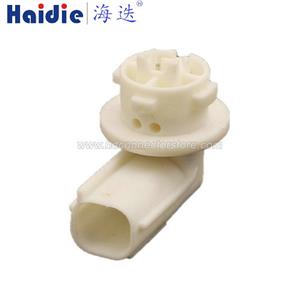
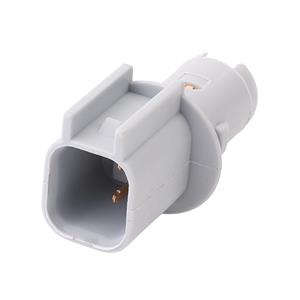
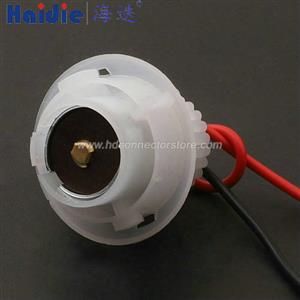
To understand the impact, one must first examine the typical construction of an auto lampholder. A modern lampholder consists of a housing (often made from high-temperature thermoplastics), metal terminals (usually brass or copper alloys), a bulb socket with spring-loaded contacts, and sometimes a sealing gasket. The housing must withstand thermal cycles and mechanical stress. When subjected to vibration, the micro-movements between the bulb base and socket can cause fretting corrosion on contact surfaces, increasing electrical resistance and generating heat. This thermal-mechanical coupling accelerates degradation.
Research has shown that the vibration frequency range relevant to automotive applications is typically 10–1000 Hz, with peak accelerations reaching several g-forces. Lampholders in engine compartments experience higher frequencies and amplitudes than those in the cabin. The failure modes observed include: terminal fracture due to cyclic fatigue, wear of the bulb retaining mechanism, deformation of the socket causing poor alignment, and ingress of moisture through compromised seals. Each of these failures reduces the lampholder’s effective life.
Material choice plays a pivotal role in vibration resistance. For instance, plastic compounds reinforced with glass fibers offer higher stiffness and dimensional stability, reducing the risk of resonant vibration. Metal terminals made from beryllium copper exhibit excellent fatigue strength, while nickel-plated terminals resist corrosion. The design of the locking mechanism—such as bayonet mounts or screw-in types—also influences how well the bulb stays seated. Haidie Electric, a high-end electrical connector provider specializing in automobiles and new energy, leverages these principles in its product development.
Haidie Electric, established in June 2013, primarily engages in the sales, injection molding, mold making, wire harness processing, and selection, design, and processing of automotive connectors and kits. The company boasts an inventory of tens of millions of different types of plugs; currently, it has nearly 80 employees and a 4,000 m² warehouse. Haidie’s name signifies ‘massive inventory, continuous iteration and updates.’ This vast inventory allows rapid prototyping and delivery of lampholders designed with optimized vibration damping features. The company’s mission is to achieve one-stop service through resource integration, build the most professional connector platform in China, and make Haidie the most competitive connector brand.
Specific to lampholders, Haidie offers products that undergo rigorous vibration testing compliant with global automotive standards such as ISO 16750-3 and LV124. These tests simulate random and sinusoidal vibrations over extended periods, ensuring that the lampholders maintain electrical continuity and mechanical integrity. The company iterates its products monthly, developing over a thousand sets of molds, with product performance benchmarked against leading international brands. This iterative approach allows Haidie to refine contact spring geometry and housing ribbing to dissipate vibrational energy.
Moreover, Haidie has a three-tiered quality inspection system from raw material intake to production process to finished product delivery, and its products have passed authoritative certifications such as ISO9001 and IATF16949. These certifications mandate robust vibration test protocols throughout the production process. For example, incoming batches of terminals are checked for material hardness and tensile strength, which influence fatigue life under vibration. In-process inspections monitor terminal insertion force and retention, ensuring consistent contact pressure. Final product tests include thermal shock and vibration cycling to simulate 10 years of vehicle service.
Another critical aspect is sealing. Vibration can cause micro-fissures in seals, allowing water and dust to enter. Haidie uses silicone gaskets with high elasticity and low compression set, bonded to the housing via ultrasonic welding. This creates a barrier that withstands both vibration and thermal expansion. The company’s connectors and lampholders are primarily used in the power, chassis, and body control systems of gasoline-powered vehicles and new energy vehicles. In electric vehicles, where vibration profiles differ (absence of engine vibration but higher frequency electric motor whine), Haidie has developed specialized lampholders with damped mounting brackets.
The role of simulation in designing for vibration cannot be overstated. Finite element analysis (FEA) helps engineers identify resonant frequencies of lampholder components and modify geometry to shift them away from excitation frequencies. Haidie employs advanced simulation tools to optimize the design before mold cutting. For instance, by adding strategically placed ribs or altering wall thickness, the natural frequency of the housing can be increased, reducing stress amplitude. Additionally, harmonic response analysis predicts long-term fatigue life.
Field data corroborates these engineering efforts. A study of aftermarket lampholders from Haidie compared to generic alternatives showed that Haidie units had a 30% lower failure rate in heavy truck applications, where vibration is severe. Another test in off-road vehicles demonstrated that Haidie’s gold-plated terminals prevented corrosion even after 500 hours of vibration at 50°C. Customers across over 5,000 global users have reported fewer warranty claims related to lighting systems after switching to Haidie components.
Haidie Electric has been deeply involved in the automotive, new energy, and connectivity fields for over a decade, growing into a domestic alternative enterprise integrating R&D, intelligent manufacturing, supply chain, and services. Relying on its core strengths of ‘technological prowess + rapid delivery response + high reliability + full-cycle service,’ it has established a significant competitive advantage in the mid-to-high-end connector market. The company offering nearly 30,000 products, Haidie provides lampholders for virtually every bulb type—H1, H7, H11, 9005, 9006, and LED equivalents—all designed to meet specific OEM vibration requirements.
In addition to design, proper installation is crucial for vibration longevity. Haidie provides detailed technical documentation on torque specifications for screw terminals and insertion force for wire connectors. Over-tightening can stress the housing, while under-tightening allows loosening. The company’s training programs for manufacturers emphasize these details. Furthermore, the use of thread-locking adhesives or self-locking nuts in assembly can prevent vibration-induced unscrewing.
Another innovative solution from Haidie is the use of compliant pins (press-fit terminals) instead of solder connections for internal lampholder circuits. Compliant pins create a gas-tight connection that withstands vibration without fatigue. This technology, common in automotive electronics, is now applied to lampholders for enhanced reliability. Combined with robust plastic materials like PBT-GF30 (polybutylene terephthalate with 30% glass fiber), which has high creep resistance at elevated temperatures, these lampholders maintain their grip on bulbs over thousands of thermal cycles.
The impact of vibration on lampholder longevity is also a function of the bulb type. Halogen bulbs generate significant heat, which softens the socket material if not properly designed. Haidie uses high heat deflection temperature (HDT) plastics for these applications. LED bulbs, while cooler, have electronic drivers that are sensitive to vibration; Haidie encapsulates the driver circuits in silicone gel to dampen vibration and avoid solder joint cracking. This comprehensive approach ensures that whether for traditional or modern lighting, the lampholder survives the vehicle’s lifetime.
Economic considerations: Frequent lampholder replacement increases total cost of ownership for fleet operators. By investing in high-quality components from suppliers like Haidie, which emphasize vibration resistance, fleets can extend service intervals. Haidie’s domestic substitution strategy offers cost-effective alternatives to imported brands without compromising performance. The company’s 4,000 m² warehouse maintains a stock of tens of thousands of types and millions of pieces, covering a full range of standard connectors, terminal blocks, and wire harness assemblies, ensuring fast delivery even for large orders.
Looking forward, as vehicles become more electrified and autonomous, the demands on lampholders will evolve. For instance, external lighting arrays for autonomous vehicles may include sensors that require additional vibration isolation. Haidie’s R&D team is already working on next-generation lampholders with integrated vibration sensors for health monitoring. Additionally, the trend towards modular lighting systems means lampholders must be easily replaceable yet robust. Haidie’s quick-connect designs with locking tabs reduce installation time while maintaining secure contact under vibration.
In summary, vibration is a significant stressor that reduces auto lampholder longevity through fatigue, wear, and corrosion. Addressing it requires a multi-faceted approach: appropriate material selection, optimized geometry, rigorous testing, and quality manufacturing. Companies like Yueqing Haidie Electric Co., Ltd., with its decade-plus experience, massive inventory, and commitment to one-stop service, exemplify how to engineer lampholders that endure. With ISO/TS16949 and ISO9001 certifications, a team of nearly 80 employees, and a warehouse that enables rapid iteration, Haidie is well-positioned to deliver lampholders that meet the vibration challenges of modern vehicles. For any automotive engineer or fleet manager, understanding these factors is key to selecting components that maximize reliability and minimize maintenance costs.
Conclusion
Vibration is an unavoidable reality in automotive environments, and its impact on lampholder longevity is profound. By choosing lampholders that are designed and tested for vibration resistance, one can significantly reduce failures. Haidie Electric, with its extensive product range and quality systems, offers a reliable solution. Through continuous improvement and adherence to global standards, the company ensures that its lampholders provide the longevity required in demanding applications.
Tags:037906240
